IoT Device Management

UnityAI: The Unified IoT and Automation Platform engineered to manage and automate complex environments, from advanced residences to sprawling commercial and industrial sites.

UnityAI Platform

The definitive, AI-powered integration platform for unified IoT management and automation
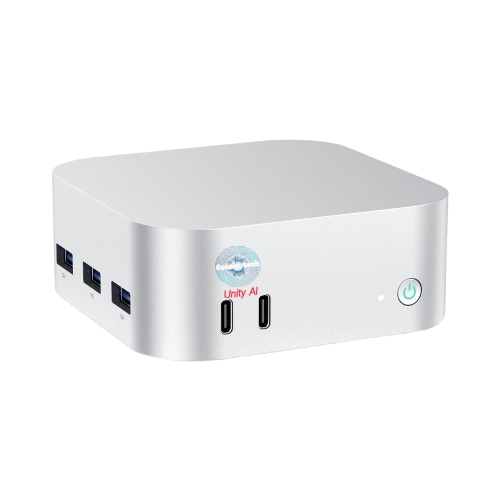
UnityAI IoT and Automation Platform

UnityAI: The Unified IoT and Automation Platform

Stop wrestling with incompatible legacy systems and proprietary software silos. UnityAI is the powerful, scalable solution built on open standards, guaranteeing seamless integration across diverse hardware and protecting your long-term investment.

UnityAI is a sophisticated automation and monitoring engine that goes far beyond simple control. It enables you to define mission-critical rules, schedules, and analytics-driven scripts to optimize resource usage, enhance security, and ensure operational continuity. By operating on your secure, local infrastructure, UnityAI provides maximum data privacy, total system control, and industrial-grade reliability without relying on external cloud connectivity for core functions.

Key Features & Capabilities

  • Universal Site Integration: Seamlessly connect and control thousands of assets, sensors, and devices across any scale of operation using a vast library of Connectors (integrations) that adhere to open industrial and residential standards. This includes support for BACnet, Modbus, MQTT, KNX, Zigbee, Z-Wave, and standard web APIs.
  • Intelligent Edge Automation: Build complex, event-driven rules and analytics models using a modern graphical interface, high-level scripting languages (like JavaScript), or a dedicated rule language to orchestrate critical infrastructure and operational processes.
  • Role-Based Interfaces: Access, monitor, and control assets with multiple customizable, responsive web UIs. The platform supports dedicated Supervisor Dashboards for management, Operator Control Panels for maintenance, and remote access interfaces.
  • Industrial Data Persistence & Reporting: Track, store, and graphically analyze historical data for critical operational metrics (e.g., energy consumption, temperature, machine status, occupancy) to facilitate regulatory compliance, predictive maintenance, and operational optimization.
  • Scalable Hardware Agnostic Deployment: Install and run on a variety of computing infrastructures, from compact industrial PCs (IPCs) and dedicated servers to containerized (Docker) environments, providing the flexibility needed for large-scale, distributed deployments.

Technical Specifications

Product Type Unified IoT, Building Automation, and Edge Control Platform
Core Framework Modular Java-based Architecture for High Availability (HA) and Reliability
Supported OS Industrial Linux Distributions (Recommended), Windows Server, Containerized (Docker/Kubernetes)
Installation Requirement Java Runtime Environment (JRE) v11 or later
Integrations (Connectors) 400+ core integrations, continuously updated for industrial and consumer standards
Supported Standards BACnet, Modbus, OPC UA, MQTT, KNX, Zigbee, Z-Wave, HTTP/REST, and proprietary vendor APIs
Automation Rule Support Block-based Logic (UI), Scripting (JavaScript/ECMAScript), and powerful Domain Specific Language (DSL) for complex workflows
Database Support RRD4j (High-speed data), InfluxDB, PostgreSQL, MySQL/MariaDB (for data warehousing and analytics)
Access Interfaces Role-based Web UIs (Desktop & Mobile Responsive) and secure API access for third-party systems
Licensing Commercial-grade software solution built on robust industry standards
Core Dependency Zero reliance on external cloud for primary monitoring and control
Optional Services Secure UnityConnect cloud layer available for enterprise-level data aggregation, remote site management, and integration with public AI/Assistant services
Get Quote

Who Benefits from UnityAI?

The platform serves professionals who require a highly reliable, scalable, and standards-compliant solution for unified control, monitoring, and AI-driven automation across single or multi-site deployments.

Building Managers

Facility directors responsible for maintaining optimal building operations, energy efficiency, and occupant comfort across commercial properties.

Benefits:

  • Centralized control of HVAC, lighting, and security systems
  • Real-time monitoring of building performance metrics
  • Predictive maintenance scheduling
  • Energy consumption optimization

Industrial Integrators

System integrators and automation specialists who design and implement complex control systems for manufacturing and industrial environments.

Benefits:

  • Seamless integration of diverse industrial protocols
  • Advanced rule-based automation workflows
  • Scalable deployment across distributed sites
  • Standards-compliant interoperability

Facility Directors

Operations managers overseeing large-scale facilities requiring comprehensive monitoring and control of critical infrastructure.

Benefits:

  • Multi-site facility management
  • Regulatory compliance reporting
  • Risk mitigation through predictive analytics
  • Operational continuity assurance

Advanced Residential Users

Tech-savvy homeowners and property managers seeking sophisticated automation and control over smart home ecosystems.

Benefits:

  • Unified control of all smart devices
  • Local processing for privacy and security
  • Custom automation scenarios
  • Future-proof open standards platform

UnityAI Implementation Planning Guide

Strategic considerations for deploying UnityAI across different environments and scales

1. Assessment & Planning Phase

Successful UnityAI deployment begins with comprehensive assessment of your current infrastructure and future requirements.

Planning Consideration
Current System Inventory: Document all existing devices, protocols, and systems that need integration
Scalability Requirements: Determine current and future device counts, data volumes, and performance needs
Network Infrastructure: Evaluate network topology, bandwidth, and security requirements
Hardware Selection: Choose appropriate computing platform (IPC, server, or containerized deployment)
Security Requirements: Define access controls, data privacy needs, and compliance obligations
Integration Timeline: Establish phased rollout plan to minimize operational disruption

2. Deployment Strategies

UnityAI supports multiple deployment models to accommodate different operational requirements and infrastructure constraints.

On-Premises Server Deployment

Ideal for organizations requiring complete local control and data sovereignty.

  • Dedicated server hardware for maximum performance
  • Complete data control and privacy
  • Highest availability and reliability
  • Custom hardware specifications possible

Industrial PC (IPC) Solution

Compact, rugged deployment for harsh environments or space-constrained installations.

  • Industrial-grade hardware durability
  • Compact form factor for limited spaces
  • Extended temperature range operation
  • Integrated I/O capabilities

Containerized Deployment

Modern, scalable solution using Docker/Kubernetes for cloud-native operations.

  • Easy scaling and resource management
  • Simplified updates and maintenance
  • Multi-platform deployment flexibility
  • Microservices architecture support

3. Integration Best Practices

Maximize the value of your UnityAI investment through proper integration planning and execution.

Start Small, Scale Smart

Begin with a pilot deployment focusing on critical systems, then expand based on proven results and user feedback.

Standards-First Approach

Prioritize open standards and protocols to ensure long-term interoperability and avoid vendor lock-in.

Security by Design

Implement role-based access controls, network segmentation, and regular security updates from day one.

Performance Monitoring

Establish baseline performance metrics and monitoring to ensure optimal system operation and quick issue resolution.

Ready to Transform Your IoT Management?

Contact our experts to assess your requirements and design a UnityAI solution that delivers unified control and automation for your environment.