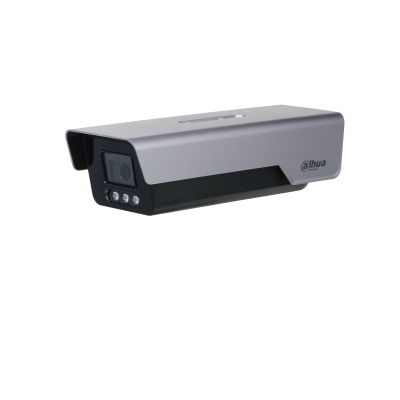
Step 1: Making the Technology and Solution Choice
The first step is defining your primary use case. This dictates the type of ANPR solution you'll need.
| Use Case |
Recommended Solution Type |
Key Focus |
| Access Control (e.g., gated communities, corporate parks, residential blocks) |
Dedicated Edge-Based ANPR Camera |
Real-time decision-making (open barrier), high accuracy at slow speeds, integration with gate/barrier control. |
| Parking Management (e.g., paid parking lots, duration monitoring) |
Dedicated Edge-Based ANPR/VMS Integrated System |
Transaction management, real-time occupancy data, integration with payment systems (POS). |
| High-Speed Traffic Monitoring (e.g., highways, law enforcement, tolling) |
High-Shutter Speed, Dedicated ANPR Cameras with Back-End Server Processing |
Capturing clear images at high speeds, high processing throughput, regional/national database integration. |
| Security/Surveillance (e.g., general monitoring, vehicle tracking) |
Hybrid or VMS-Integrated ANPR |
Integration with existing Video Management System (VMS), alerting on 'hotlist' vehicles, forensic search capabilities. |
Step 2: Key Features to Look for in ANPR Solutions
The core components are the camera and the recognition software (engine).
A. Camera/Hardware Features
| Feature |
Importance |
Detail |
| Dedicated ANPR Camera |
Critical |
Purpose-built for license plate reading, not just general CCTV. Look for high-resolution sensor (min. 1080p), high frame rate (30+ fps), and fast shutter speed (1/10,000s to 1/20,000s) to freeze motion. |
| Infrared (IR) Illumination |
Critical |
Essential for 24/7 operation and glare reduction. Look for Pulsed IR Illuminators synchronized with the camera shutter to provide a burst of light for the plate. 850nm IR is common; 940nm IR is covert (invisible) but often less effective. |
| Edge Processing |
High |
The camera processes the image and extracts the plate data within the camera (at the "edge"). This is faster, requires less bandwidth for data transmission, and reduces the dependency on a central server for recognition. |
| Optical Zoom/Motorized Lens |
High |
Allows for precise adjustment of the Field of View (FoV) to focus only on the required capture zone, maximizing pixels-per-plate and accuracy. |
| Environmental Rating |
High |
Look for IP66/IP67 rating for dust/water ingress and IK10 for vandal resistance if applicable. Ensure the operating temperature range suits your climate. |
B. Software/System Features
| Feature |
Importance |
Detail |
| Recognition Accuracy |
Critical |
The most vital metric. Demand verified performance reports showing ≥95% accuracy in real-world conditions (day/night, varying weather). A "confidence score" should be provided with each read. |
| Multi-Plate/Country Support |
High |
The system must be trained to recognize all relevant plate formats in your region (font, size, colour, single/dual-line). |
| Make and Model Recognition (MMR) |
Moderate-High |
Advanced feature that confirms the vehicle make/model/colour matches the plate data, flagging potential cloned plates. |
| Integration (API) |
High |
An open Application Programming Interface (API) is essential for integrating with your existing security, access control, or parking management systems. |
| Data Security & Privacy |
Critical |
Look for features like data encryption (in transit and at rest), strict access control (audit trails of who accessed what and when), and automated data retention/deletion policies to ensure compliance with privacy regulations (e.g., GDPR, local laws). |
Step 3: Estimated Costs and Complexity Factors
ANPR costs vary significantly based on solution type, scale, and complexity.
A. Estimated Costs (Indicative Figures per Lane/Entrance)
| Item |
Description |
Cost Range (Estimated in ZAR) |
| ANPR Camera Hardware (Dedicated, Edge-Based) |
High-resolution, IR, dedicated ANPR camera unit. |
R25,980 - R69,280+ per camera |
| ANPR Software License |
Per-camera or per-channel license for the recognition engine. |
R5,196 - R25,980 (One-time or Annual Fee) |
| Installation & Configuration |
Mounting, cabling, power, network setup, camera aiming (the most crucial step). |
R8,660 - R43,300+ per camera point (highly site-dependent) |
| Back-End Server/Storage (If Server-Based) |
Physical or Virtual Server (NVR/VMS) and dedicated storage for plate data and images. |
R34,640 - R173,200+ (One-time, depends on scale) |
| Total Upfront Cost (One Lane) |
Single camera, software, and basic installation. |
R39,836 - R138,560+ |
Note: These figures are indicative and exclude civil works (trenching, poles, electricity) and the cost of any integrated systems (barriers, ticketing machines).
B. Factors Affecting Complexity and Cost
These factors increase the difficulty, time, and materials required, directly impacting the final cost:
- High Traffic Speed: Requires more specialized cameras (higher shutter speed) and robust back-end processing, significantly increasing hardware and software costs.
- Multi-Lane Monitoring: Each lane often requires a dedicated camera pointed optimally, as one camera can rarely cover multiple lanes effectively with high accuracy.
- Lack of Infrastructure: Remote locations requiring new poles, electricity supply, or long-distance network cabling (PoE/Fibre) will incur substantial civil works costs.
- Challenging Environment: Extreme glare (sun), heavy fog, snow, or high humidity requires weatherized cameras and specialized illumination/filtering, increasing hardware cost.
- Integration Requirements: Complex integration with legacy VMS, proprietary access control systems, or municipal databases increases software customization and commissioning costs.
C. Other Hidden Costs
- Ongoing Software License/Support Fees (SaaS Model): Many vendors use a Subscription as a Service (SaaS) model, meaning a recurring monthly or annual fee for software, updates, and technical support.
- Data Storage and Management: High-volume traffic requires significant, robust storage. Factor in the cost of NAS/SAN/Cloud storage and the necessary retention period for legal compliance.
- Networking Bandwidth: If you choose a server-based solution, high-resolution video streams from multiple cameras can saturate your network. Upgrading switches and bandwidth is a hidden cost.
- Maintenance: Regular cleaning of lenses and IR illuminators is essential, especially in dusty environments, requiring a planned maintenance budget.
Step 4: Common Mistakes, Shortcuts, and Installer Tricks
A. Common Mistakes and Shortcuts to Avoid
- Using a General Purpose CCTV Camera: The biggest mistake. Standard security cameras lack the necessary high-speed shutter and synchronized IR to capture clear plate images day and night, leading to low accuracy and system failure. Don't use a non-ANPR camera for ANPR.
- Improper Camera Aiming: The ANPR camera must be mounted with the ideal angle and zoom level.
- Horizontal Skew: Keep the camera angle to the vehicle's line of travel under 30° (ideally ≤15°) to prevent plate distortion.
- Vertical Angle/Height: Mount the camera as close to the height of the plate as possible. Too high (≥45° angle) causes reflection and shadowing issues.
- Under-Zooming: Trying to capture a wide-angle view of the area with the ANPR camera. This reduces the number of pixels on the plate, making OCR unreliable. Zoom in so the license plate occupies a sufficient percentage of the image frame.
- Ignoring Data Privacy: Failing to implement a Data Protection Impact Assessment (DPIA), clear signage, and robust data retention/security policies can lead to legal liability.
- Poor Illumination Planning: Relying solely on natural light or existing street lighting for nighttime operation. Dedicated, synchronized IR is non-negotiable for 24/7 reliability.
B. Tricks Installers Use to Sell Cheap Products
- "We'll use your existing CCTV cameras." They plan to use standard CCTV cameras for the ANPR feed. This is the number one failure point. They save thousands on dedicated hardware, you get a system that works unreliably, if at all, at night or in fast traffic.
- "Our software is so smart it can read anything!" They rely purely on software post-processing of a poor-quality general video feed. While modern AI is good, it cannot create a clear image from a blurry, under-exposed, or poorly zoomed video frame. They are compensating for cheap hardware with expensive, yet ultimately flawed, software.
- Quoting Hardware Only: They provide a great low price on the camera hardware but conveniently omit the cost of the necessary ongoing software license (SaaS), which is a recurring expense, or the installation/cabling to the server.
- Promising Accuracy Without Proof: They quote an accuracy rate (98%) based on ideal lab conditions. Demand a 24-hour on-site demo/trial to verify performance under your specific day/night, sun-glare, and traffic speed conditions.
Final Recommendation and Resolution
The resolution for your ANPR system must be a commitment to quality and site-specific engineering over low upfront cost.
Recommendation: The Edge-Based Dedicated ANPR System
Deploy dedicated, edge-based ANPR cameras configured to cover a single lane/vehicle path each, with all image processing occurring on the camera itself. Integrate the clean plate data (text, time, confidence score) via API into a robust, secure back-end management system (VMS/Database).
Justification:
- Highest Accuracy: Dedicated ANPR hardware (fast shutter, synchronized IR, purpose-built sensor) ensures the highest quality image capture under all conditions, leading to maximal recognition accuracy (≥95%).
- Low Latency & Reliability: Edge-based processing provides near-instantaneous plate recognition and decision-making (critical for access control barriers) and reduces the risk of recognition failure due to server or network congestion.
- Cost-Effective in the Long Run: While the upfront camera cost is higher, the reliability, reduced network overhead, and avoidance of ongoing service calls for misreads lead to a lower Total Cost of Ownership (TCO) and a higher return on investment.
Security Expert's Bottom Line: You are paying for the read accuracy. An ANPR system that fails to read plates 10-20% of the time is a 10-20% security or revenue risk. Prioritize verified accuracy and proper installation geometry above all else. Never compromise on dedicated hardware.