
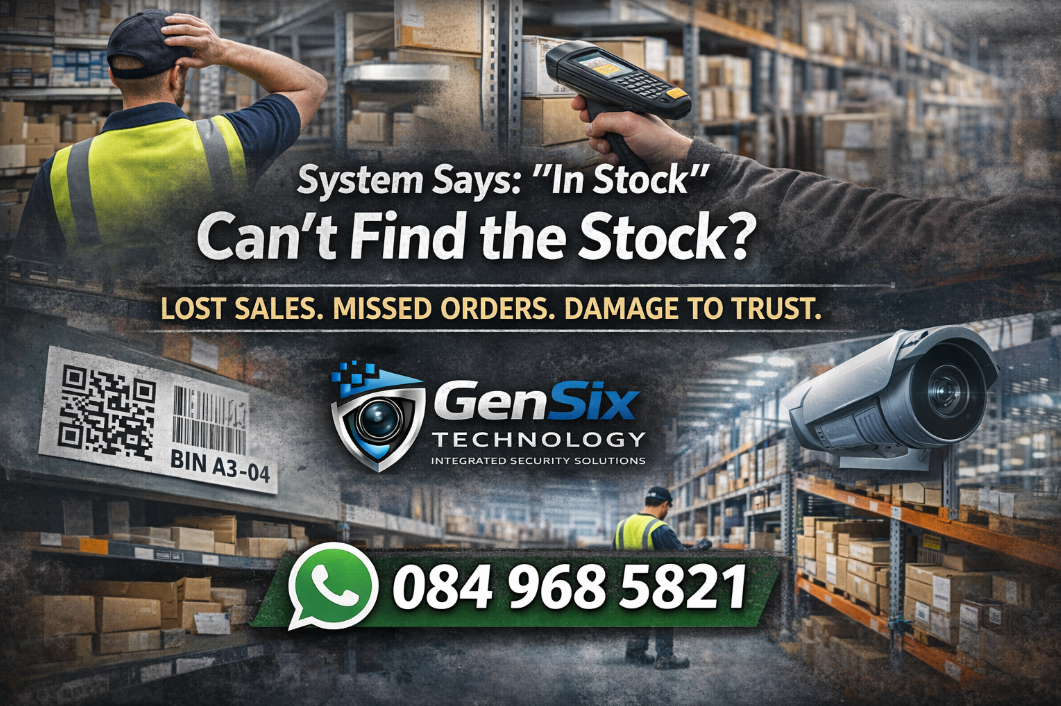
When Your System Says “In Stock” — But Reality Says Otherwise
It’s a familiar moment.
A customer calls.
You check the system.
Stock is available.
You confirm the order.
Then the breakdown begins.
The picker can’t find the item.
Staff start searching.
Time passes.
The customer waits.
Eventually, the response changes:
“We’re sorry, we can’t locate the stock.”
That sale is gone.
Not because demand didn’t exist — but because your system and your reality are no longer aligned.
This Isn’t an Inventory Problem
It’s easy to label this as “inventory management.”
That’s inaccurate.
What you’re dealing with is a failure of inventory integrity — a structural breakdown where:
- Stock movements are not consistently recorded
- Items are placed in incorrect locations
- Adjustments are delayed or bypassed
- Staff rely on memory instead of systems
Over time, the system becomes a fiction layer.
And the business starts operating on assumptions instead of facts.
How Revenue Is Lost — Every Day
1. Immediate Lost Sales
Customers ready to buy are turned away because stock cannot be physically fulfilled.
2. Erosion of Trust
Once customers experience failed fulfilment, they stop relying on your availability.
They don’t complain.
They simply don’t come back.
3. Operational Drag
Staff spend time searching instead of picking.
Orders slow down.
Throughput drops.
4. Poor Decision-Making
Reordering is based on incorrect data.
- Over-ordering slow items
- Running out of fast-moving stock
Capital gets tied up in the wrong places — while revenue opportunities are missed.
The Root Cause: Invisible Stock Movement
At its core, the problem is simple:
Stock is moving — but the system isn’t seeing it.
Without enforced controls at movement points:
- Items are received incorrectly
- Put-away is inconsistent
- Picking is not validated
- Transfers happen without records
And once that happens, accuracy begins to decay immediately.
The Control That Changes Everything
The solution is not complex — but it must be enforced.
Inventory Movement Enforcement & Verification
A structured control layer that ensures:
- Every movement is captured
- Every action is validated
- Every transaction is traceable
What This Looks Like in Practice
1. Mandatory Scanning
Every stock movement requires a scan:
- Receiving
- Put-away
- Picking
- Transfers
No scan = no movement
2. Location-Based Inventory
Stock is tied to real, physical locations such as shelves, bins, and racks.
3. Real-Time Exception Alerts
The system flags issues immediately — missing stock, negative stock, and repeated adjustments.
4. CCTV-Linked Verification
Stock events are linked to video, allowing validation of mis-picks, shrinkage, and process breakdowns.
5. Operational Visibility
A simple dashboard shows live activity, alerts, and movement history.
What Happens When This Is Implemented
- Recovered lost sales
- Faster and more accurate picking
- Improved staff productivity
- Reliable stock levels
- Increased customer confidence
The business stops losing revenue silently.
Why This Matters More Than You Think
This issue exists across retail, warehouses, distributors, and trade counters — and in most cases, it is already costing money right now.
Gensix Technology
At Gensix Technology, we focus on identifying and correcting real-world operational breakdowns that directly impact revenue.
Our approach is grounded in:
- On-site observation
- Practical system design
- Integration of CCTV, networking, and operational controls
We don’t start with products.
We start with where revenue is being constrained — and how to release it.
If your system says you have stock, but your team can’t find it, you don’t have an inventory problem.
You have a revenue control problem.